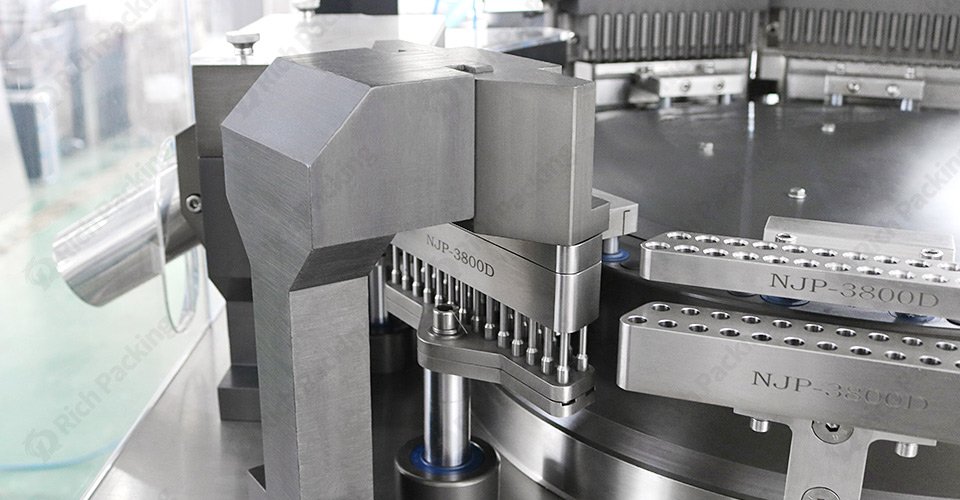
Capsule manufacturing is a fundamental process in pharmaceutical, nutraceutical, and herbal industries. To meet different production scales and operational needs, manufacturers use various types of capsule filling equipment. These machines are designed to ensure accurate dosing, hygienic processing, and efficient capsule production.
A capsule filler machine comes in three main types: manual, semi-automatic, and fully automatic. Each type offers different levels of automation, production capacity, and operational complexity, making them suitable for specific manufacturing environments.
Manual Capsule Filler Machines
Manual capsule filler machines are the simplest form of capsule production equipment. They are widely used in small-scale operations, research laboratories, and pharmacy setups.
Key Features
- Fully operator-controlled process
- Basic mechanical design
- Low production capacity
- Suitable for small batches
Working Method
In manual systems, operators perform all steps, including capsule separation, filling, and closing. This makes the process slower but more cost-effective for limited production needs.
Applications
- Laboratory research and testing
- Small pharmacies
- Trial formulation development
Manual machines are ideal where production volume is low and flexibility is more important than speed.
Semi-Automatic Capsule Filler Machines
Semi-automatic machines combine manual handling with automated processes. They are commonly used in medium-scale production environments where efficiency and accuracy are required without full automation costs.
Key Features
- Partial automation of filling and dosing
- Operator-assisted capsule loading and unloading
- Improved speed compared to manual machines
- Moderate production capacity
Working Method
In semi-automatic systems, capsules are loaded manually, but the machine handles key operations such as dosing, filling, and sometimes sealing. This reduces labor effort while improving consistency.
Applications
- Pharmaceutical manufacturing units
- Nutraceutical production facilities
- Contract manufacturing operations
Semi-automatic machines offer a balance between cost and performance, making them suitable for growing businesses.
Automatic Capsule Filler Machines
Automatic capsule filler machines represent the most advanced level of capsule production technology. They are designed for large-scale manufacturing with minimal human intervention.
Key Features
- Fully automated production cycle
- High-speed capsule filling capability
- Integrated quality control systems
- Continuous operation with minimal downtime
Working Method
These machines handle the entire process automatically, including capsule feeding, separation, filling, closing, and ejection. Advanced systems may also include defect detection and rejection mechanisms.
Applications
- Large pharmaceutical manufacturing plants
- High-volume nutraceutical production
- Export-oriented production facilities
Automatic systems are designed for efficiency, consistency, and large-scale output.
Key Differences Between Machine Types
Each type of capsule filler machine serves different production needs based on automation level and output capacity.
1. Production Capacity
- Manual: Low output
- Semi-automatic: Medium output
- Automatic: High output
2. Level of Automation
- Manual: Fully operator-driven
- Semi-automatic: Partial automation
- Automatic: Fully automated
3. Cost and Investment
- Manual: Low investment
- Semi-automatic: Moderate investment
- Automatic: High investment
4. Operational Efficiency
- Manual: Time-consuming
- Semi-automatic: Balanced efficiency
- Automatic: Maximum efficiency
Choosing the Right Capsule Filler Machine
Selecting the appropriate machine depends on several factors:
- Production volume requirements
- Budget constraints
- Type of formulation being produced
- Future scalability plans
- Labor availability
Small businesses often start with manual or semi-automatic systems, while large manufacturers invest in fully automatic machines for high-volume production.
Importance in Modern Manufacturing
Capsule filler machines play a crucial role in ensuring efficient and accurate capsule production. As industry demand continues to grow, manufacturers require equipment that can deliver both quality and scalability.
Each machine type contributes differently to production systems, helping businesses meet varying operational needs while maintaining product standards.
Conclusion
Capsule filler machines are available in manual, semi-automatic, and automatic configurations, each designed for specific production scales and requirements. Understanding their differences helps manufacturers choose the right solution for their operations.
From small laboratory batches to large-scale industrial production, the capsule filler machine remains an essential tool in modern pharmaceutical and nutraceutical manufacturing.