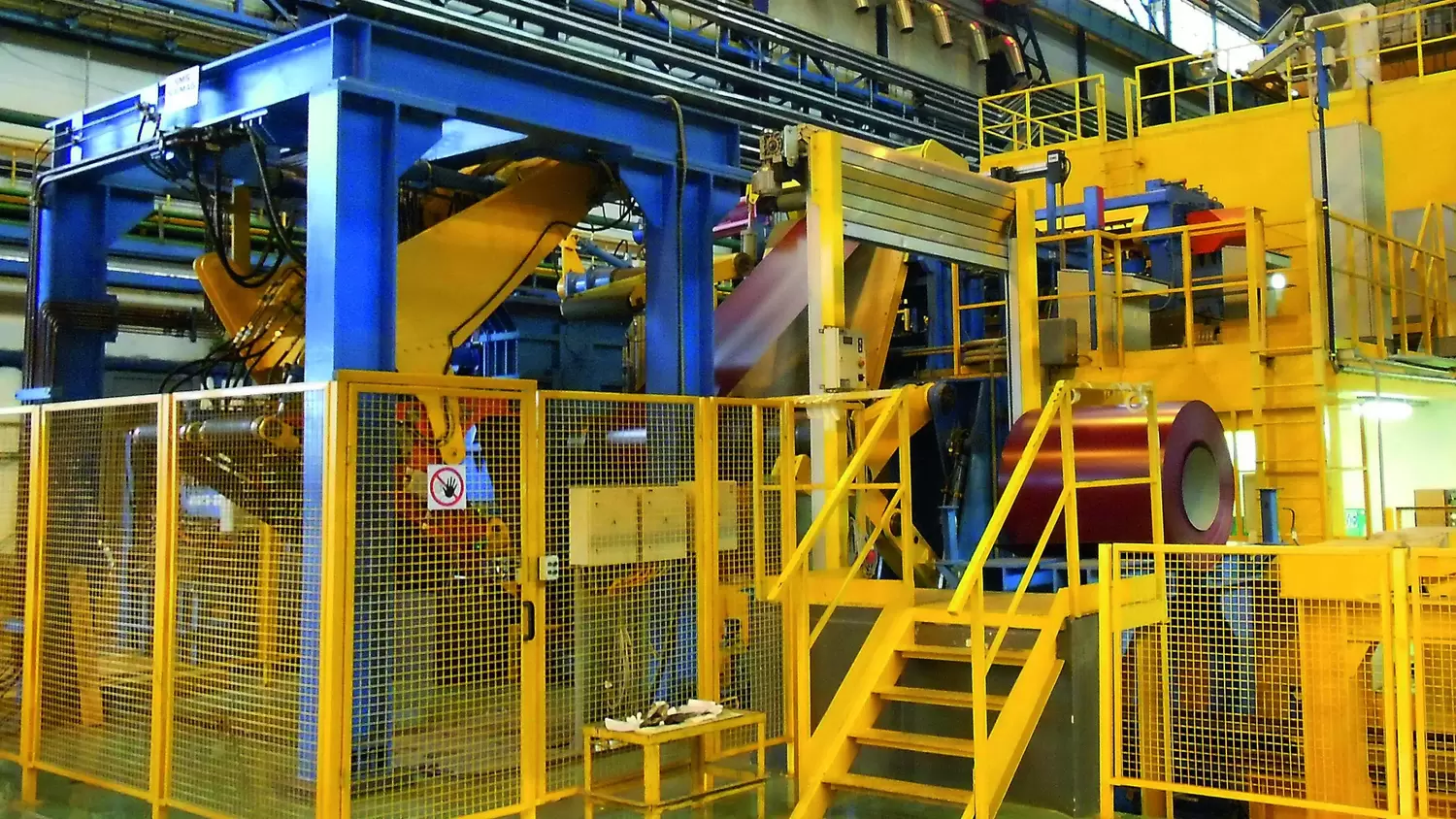
In modern metal processing industries, continuous surface treatment systems are widely used to improve the durability, appearance, and corrosion resistance of steel and aluminum products. These systems are designed to process large volumes of metal efficiently while maintaining consistent quality across every stage of production.
A modern colour coating line integrates multiple processes into a single continuous workflow, allowing metal coils to move seamlessly from entry to final recoiling. This automated system ensures precise control over cleaning, coating, curing, and finishing, making it a critical solution for industries such as construction, appliances, and transportation.
Coil Loading and Entry Preparation
The workflow begins at the entry section, where raw metal coils are loaded onto the line. Proper handling at this stage is essential to avoid surface damage and ensure smooth processing.
Operators use uncoiling systems and tension control devices to feed the metal strip into the production line at a stable speed. Alignment systems ensure that the coil enters the line correctly, preventing misfeeds and mechanical stress on the material.
Surface Cleaning and Degreasing
Once the coil enters the system, it undergoes a thorough cleaning process. This step removes oil, dust, rust, and other contaminants that could affect coating adhesion.
Typical cleaning processes include:
- Alkaline degreasing to remove oils and grease
- Water rinsing to eliminate chemical residues
- Mechanical or chemical brushing for surface preparation
- Drying to ensure a clean and moisture-free surface
Proper cleaning is essential for ensuring strong bonding between the metal surface and coating layers.
Chemical Pretreatment Process
After cleaning, the metal passes through a chemical pretreatment stage. This step enhances corrosion resistance and improves coating adhesion.
The pretreatment process usually includes conversion coating, which forms a thin protective layer on the metal surface. This layer acts as a bonding base for subsequent coatings and significantly improves durability.
If this stage is not properly controlled, it can lead to coating failure or reduced product lifespan.
Coating Application Stage
The coating application stage is one of the most critical parts of the workflow. Here, liquid coatings are applied evenly onto the metal surface using precision roller coating systems.
This stage ensures:
- Uniform coating thickness across the entire strip
- Smooth and consistent surface finish
- Strong adhesion between coating and substrate
- Minimal material waste due to controlled application
Depending on requirements, different coating types such as polyester, epoxy, or PVDF may be used to achieve specific performance characteristics.
Curing in High-Temperature Ovens
After coating application, the metal passes through a curing oven where the coating is hardened at controlled temperatures. This stage transforms the liquid coating into a durable protective layer.
Proper curing ensures:
- Strong mechanical strength and adhesion
- Resistance to corrosion and environmental stress
- Improved scratch and abrasion resistance
- Long-term color stability
Temperature control and heating uniformity are critical for preventing defects such as blistering or uneven curing.
Cooling and Stabilization
Once curing is complete, the coated metal must be cooled before further processing. Controlled cooling helps stabilize the coating and prevent deformation or surface damage.
Cooling systems ensure that the metal reaches a safe handling temperature while maintaining coating integrity. This step is essential for preserving surface quality before recoiling.
Recoiling and Final Output
In the final stage, the coated metal strip is recoiled into finished rolls. These coils are then prepared for storage, transportation, or downstream manufacturing processes.
Proper recoiling ensures:
- Tight and uniform coil winding
- Protection of coated surfaces from damage
- Easy handling for further fabrication
- Consistent product quality for end-use applications
Automation and Process Control
Modern coating systems rely heavily on automation to ensure precision and consistency throughout the workflow. Sensors and control systems continuously monitor key parameters such as line speed, coating thickness, and oven temperature.
Automation provides several advantages:
- Reduced human error and improved stability
- Real-time monitoring of production conditions
- Faster response to process variations
- Higher overall production efficiency
These systems help maintain consistent product quality even at high production speeds.
Conclusion
The continuous workflow of a colour coating line is a highly integrated and efficient process that transforms raw metal coils into high-quality coated products. From entry preparation and surface cleaning to coating, curing, and recoiling, each stage plays a vital role in ensuring durability, appearance, and performance. This structured and automated approach makes continuous coating technology essential for modern industrial manufacturing, where consistency and efficiency are key requirements.