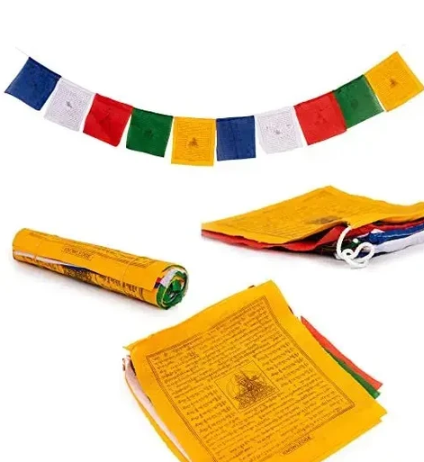
A quiet breeze moving through colorful fabric can transform an ordinary space into a gentle reminder to pause and breathe. Tibetan prayer flags carry centuries of Himalayan symbolism, combining sacred imagery, meaningful colors, and written prayers. For people practicing meditation and mindfulness, their movement can encourage observation without judgment while creating a peaceful atmosphere.
Rather than serving simply as decoration, these traditional flags can become visual prompts for reflection, intention, compassion, and awareness. Learning how they are traditionally used can help practitioners incorporate them into mindful routines with greater understanding and respect.
Understanding the Meaning Behind Prayer Flags
Prayer flags are traditionally printed with prayers, mantras, sacred imagery, and symbolic designs. Their five colors are commonly associated with elements: blue with space, white with air, red with fire, green with water, and yellow with earth. A central Wind Horse motif often represents uplifting energy and positive intentions.
The flags are placed where moving air can interact with them. Their movement can remind practitioners that thoughts, emotions, and intentions are constantly changing. This fits naturally with mindfulness and awareness. This perspective can deepen a quiet meditation routine.
Creating a Meditation Space
A meditation area does not need elaborate decoration. A small, uncluttered corner can provide enough space for quiet practice. Prayer flags can create a meaningful visual focal point. Gardens, balconies, terraces, or natural areas allow the fabric to move in the breeze.
For indoor meditation rooms, flags can be positioned near a window with gentle airflow. Their presence can remind you to begin with a calm intention and use the object as an anchor for attention.
Using Colors as Mindfulness Cues
The five colors can provide a simple structure for contemplative practice. During meditation, a practitioner might focus on one color while reflecting on qualities associated with its element. Blue can inspire thoughts of openness and spaciousness. White can encourage awareness of breath and movement. Red can bring attention to energy and motivation.
Green may invite reflection on balance and harmony, while yellow can suggest grounding and stability. These associations need not become rigid rules. Notice the color, observe the breath, recognize thoughts, and return attention whenever the mind wanders.
Connecting Breath, Wind, and Awareness
Wind provides a natural metaphor for meditation. It moves without needing to be controlled, much like thoughts that appear and disappear during quiet practice. Watching flags move can become an opportunity to observe impermanence. Notice the fabric rising, falling, twisting, and becoming still without trying to predict its next movement.
This observation can be combined with breathing exercises. Sit comfortably, relax the shoulders, and follow several natural breaths. Notice the flags, then return attention to breathing. If distracted, acknowledge it without judgment and gently begin again.
Incorporating Mantras and Intention
Many prayer flags feature sacred words or mantras. These inscriptions can encourage reflection on compassion, peace, wisdom, or kindness. Take a moment to appreciate the craftsmanship and meaning behind the imagery.
An intention can also be set before meditation. This might be a wish for patience, greater awareness, or goodwill toward others. Keep the intention generous rather than focused only on personal gain. This connects meditation with compassion and interconnectedness.
Using Prayer Flags Alongside Meditation Tools
Prayer flags can be combined with other traditional objects used in mindful practices. Singing bowls may provide a resonant sound that marks the beginning or end of a session. Tingsha bells can offer a clear auditory cue that helps practitioners settle attention or transition between activities. Together, visual movement and sound can create a structured environment for meditation.
Understanding tingsha bells origin can encourage practitioners to use such objects with appreciation. Learning their cultural background helps make a meditation space more thoughtful and respectful.
The Role of Nepalese Craftsmanship
Handmade objects can add another dimension to mindful practice because they reveal the human effort behind everyday materials. Nepalese prayer flags are often associated with traditional printing, colorful fabrics, sacred imagery, and artisan craftsmanship. Looking closely at these details can encourage slower observation and appreciation.
For meditation practitioners, this offers an opportunity to practice mindfulness before formal meditation begins. Notice the texture, patterns, colors, and movement of the fabric. Deliberate observation trains attention on sensory details.
Respectful Placement and Care
Prayer flags should be treated respectfully because they carry cultural and spiritual significance. Traditional outdoor placement allows wind to move through the fabric, while elevated locations are generally preferred. Avoid placing them where they can be stepped on, handled carelessly, or treated solely as casual decoration.
Outdoor flags naturally fade and wear because of sunlight, wind, and weather. This change can become a mindful lesson about impermanence. When replacing old flags, following respectful traditional guidance is preferable.
Making Meditation More Intentional
The most meaningful use of prayer flags begins with intention. Instead of adding them simply because they look colorful, consider what they represent and how they can support a quieter environment. A practitioner may pause before meditation, observe the flags, take several breaths, and establish a compassionate intention.
This small ritual can create a transition between daily activity and contemplative practice. Even a few moments of stillness can help the mind recognize that it is time to slow down and become present.
Bringing Himalayan Symbolism Into Daily Mindfulness
Mindfulness does not have to end when meditation ends. The symbolism associated with prayer flags can inspire awareness during ordinary activities. Watching their movement may remind someone to breathe during a stressful moment. Seeing their colors may encourage reflection on balance. Their gradual fading may provide a reminder to accept change.
Ultimately, these flags are most meaningful when approached with cultural respect and thoughtful intention. Their colors, symbols, movement, and craftsmanship can encourage reflection on compassion, impermanence, and interconnectedness.
Conclusion
When approached respectfully, Tibetan prayer flags can become more than colorful additions to a meditation space. Their symbolism, movement, craftsmanship, and connection with Himalayan traditions can provide gentle cues for breathing, observation, intention, and present-moment awareness. Whether displayed outdoors or thoughtfully incorporated into an indoor practice area, they can help create an atmosphere that encourages stillness while reminding practitioners that mindfulness grows through consistent attention, compassion, and respect.
Explore authentic Himalayan products with Himalayan Bazaar, offering handmade prayer flags, Tibetan singing bowls, Tingsha bells, meditation accessories, incense, jewelry, and home décor. Their collections connect traditional craftsmanship with mindful living, helping customers discover culturally inspired products for meditation spaces, spiritual practices, gifting, and everyday use. They focus on quality products that reflect Himalayan heritage, artisan skills, and meaningful traditions.