Inflatable military tents are an essential part of modern defense infrastructure, offering rapid deployment, portability, and adaptability to various operational environments. These tents are used for multiple purposes, including mobile command centers, field hospitals, troop accommodations, and storage units. Designing an inflatable military tent requires careful consideration of materials, structural integrity, functionality, and environmental adaptability to ensure reliability and safety under challenging conditions.
To achieve these standards, organizations and defense agencies often collaborate with Inflatable Military Tent Manufacturers who specialize in producing high-quality, durable, and customized solutions. Resources such as Inflatable Military Tent Manufacturers provide information on leading suppliers with expertise in creating tents that meet rigorous military specifications. Understanding the key design considerations followed by these manufacturers helps explain why inflatable tents are increasingly preferred over traditional rigid or pole-based shelters in military operations.
Material Selection and Durability
The choice of materials is one of the most critical factors in designing military-grade inflatable tents. Manufacturers typically use high-strength fabrics such as PVC-coated polyester, thermoplastic polyurethane (TPU), or advanced composite materials. These fabrics are selected for their resistance to punctures, tears, UV radiation, fire, and extreme temperatures. Heat-sealed or welded seams create airtight and waterproof panels, enhancing the tent’s structural integrity. Reinforced stress points at corners, anchor locations, and entrances further improve durability, ensuring that the tents can withstand the rigors of field use and extreme environmental conditions.
Structural Design and Air Chambers
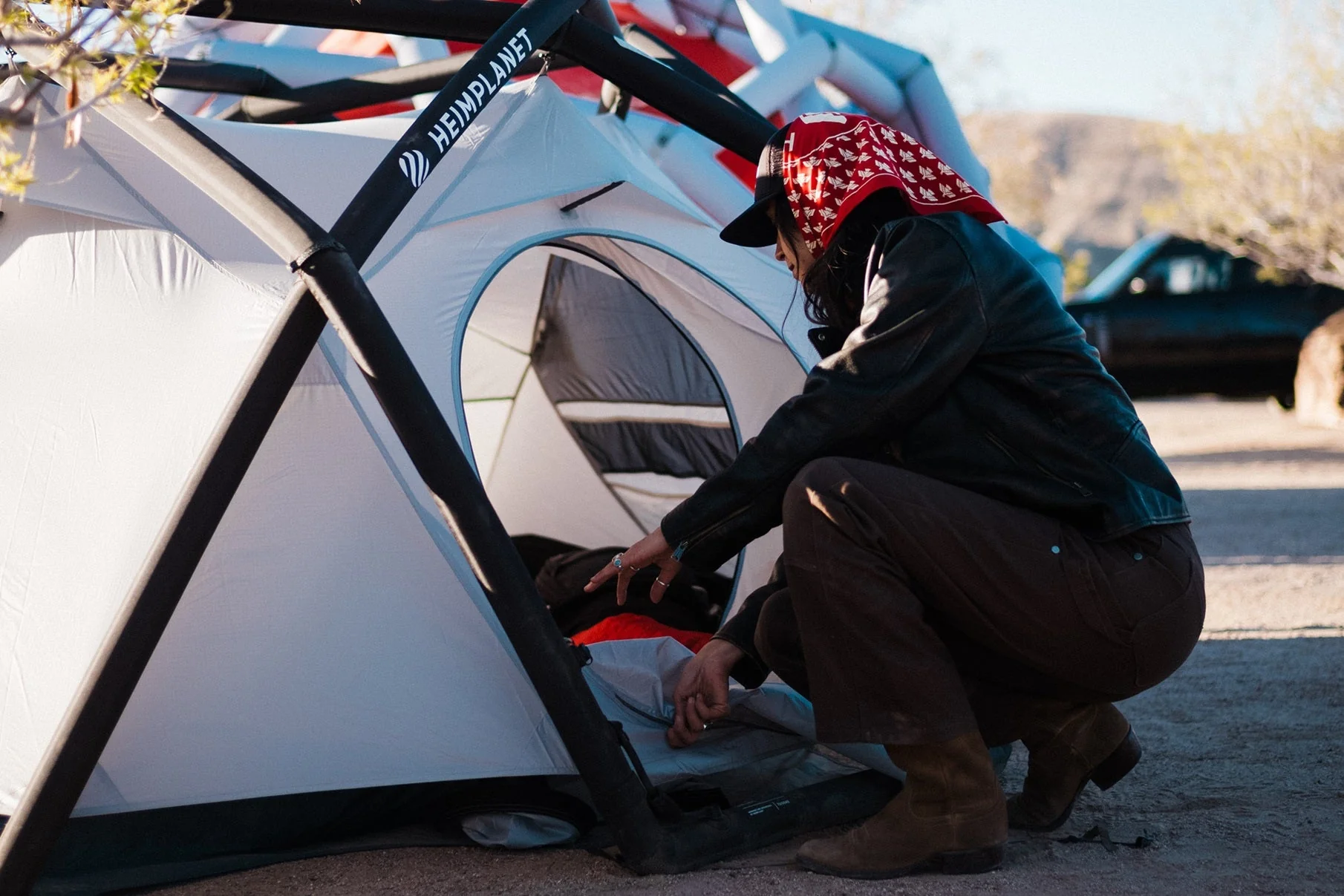
Inflatable military tents rely on air-supported beams or chambers for their structural framework. The design of these air chambers is crucial for stability and load distribution. Multi-chamber designs are commonly used to provide redundancy; if one chamber fails, the remaining chambers maintain the tent’s shape and stability. Manufacturers also focus on optimizing the tent’s shape—domes, tunnels, arches, and modular units are used depending on the operational requirement. Aerodynamic designs reduce wind resistance, while strategically positioned anchor points enhance stability on various terrains, including sand, grass, and rocky surfaces.
Modular and Functional Layouts
Military operations often require tents to be versatile and adaptable. Manufacturers design inflatable tents with modularity in mind, allowing units to be connected or expanded as needed. Internal partitions, removable walls, and configurable layouts enable multiple functions within a single tent, such as separating medical triage areas from administrative zones. Access points, such as doors and emergency exits, are strategically placed to facilitate rapid entry and evacuation. By focusing on modular and functional designs, manufacturers ensure that tents can be customized for specific mission requirements without compromising structural integrity.
Weather Resistance and Environmental Adaptation
Military tents must perform reliably in diverse and often extreme environments. Inflatable tent manufacturers consider factors such as wind, rain, snow, heat, and UV exposure during the design process. Reinforced materials, air chambers, and anchoring systems are integrated to withstand strong winds and heavy precipitation. Insulated fabrics and reflective coatings help regulate internal temperatures, improving comfort and energy efficiency. Proper ventilation is also incorporated to prevent condensation, overheating, or air pressure imbalances. These environmental adaptations are crucial for maintaining operational functionality in field conditions.
Portability and Rapid Deployment
Rapid deployment is a defining feature of inflatable military tents, and manufacturers design tents with this requirement in mind. Lightweight materials, compact packing, and integrated inflation systems allow for quick setup and teardown. Electric or manual pumps are optimized for efficiency, enabling a single tent to be fully operational within minutes. Designers also focus on minimizing the logistical burden, making transportation, handling, and storage as straightforward as possible. The ability to deploy tents quickly and efficiently is essential for field operations, disaster relief, and mobile military missions.
Safety and Redundancy Features
Safety is a key design consideration in military tents. Air pressure monitoring systems, multiple chamber redundancy, and reinforced structural points are standard features that prevent accidental collapses. Fire-retardant fabrics, secure anchoring systems, and emergency exits are incorporated to protect occupants. Manufacturers also conduct extensive testing for material performance, structural stability, and resistance to environmental stressors. These safety-focused design practices ensure that inflatable military tents provide secure, reliable shelter in high-stakes scenarios.
Customization and Specialized Features
Military operations often demand highly specialized solutions. Inflatable military tent manufacturers provide customization options, such as blackout materials for stealth operations, camouflage patterns for concealment, and integrated flooring or electrical systems for operational efficiency. Advanced models may include climate control, lighting, or communication system integration, allowing the tent to serve as a fully functional field command center or medical facility. Customization ensures that tents meet both the tactical and logistical requirements of modern military missions.
Conclusion
Designing inflatable military tents requires a careful balance of durability, stability, portability, functionality, and environmental adaptability. Leading Inflatable Military Tent Manufacturers integrate advanced materials, multi-chamber structural designs, modular layouts, weather-resistant features, and safety systems to produce reliable tents suitable for demanding military applications. By following these design considerations, manufacturers deliver tents that are not only efficient and versatile but also safe and durable in extreme operational environments. These design innovations continue to make inflatable tents an indispensable asset in modern defense and field operations.