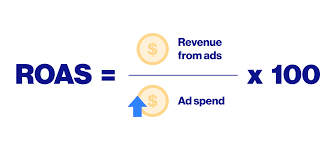
When you think about ad performance, your mind probably jumps straight to numbers—clicks, conversions, cost per lead, ROAS, the usual suspects. But here’s the thing: those figures are only part of the story.
Behind every ad campaign lies a foundation that quietly dictates how those metrics should be interpreted. That foundation? Technical SEO.
Though SEO and paid advertising might look like separate entities—one requires patience and consistency, the other is faster and flashier—they’re actually built on the same ground: your website. If that site isn’t technically sound, both channels will falter.
Let’s explore how the technical side of SEO affects your ad performance metrics.
Your ad data isn’t the full picture
You can have the best-looking ad creative in the world—catchy headline, perfect copy, irresistible call to action—but if your website doesn’t load fast or function smoothly, those clicks don’t mean much.
Most marketers stare at dashboards full of metrics, adjusting bids or tweaking copy to lift performance. But few ask the deeper question: Is my website technically capable of handling the traffic I’m paying for?
A slow, clunky, or poorly coded page can make your ads look like they’re failing, even when the targeting and messaging are solid. That’s not a creative issue. That’s a technical SEO issue in disguise.
Page speed quietly controls your return on ad spend
Let’s talk about the ROAS acronym—Return on Ad Spend. It’s the go-to number that tells you how much money you make back for every dollar spent on ads.
But here’s the twist: ROAS doesn’t just depend on ad strategy. It depends on how well your landing page performs once the user arrives.
A sluggish site can drag your Quality Score down, push your cost per click up, and bleed your budget dry—all without you realizing it. That’s why technical SEO consultants spend so much time on performance optimization.
They shave milliseconds off load times, compress images, streamline code, and test across devices—because every fraction of a second saved and every smoother user experience means a higher Quality Landing-page Score, lower cost-per-click (CPC), and a stronger return ROAS.
Fast websites don’t just rank better. They lead to long-term user experience + brand perception, supporting both paid and organic channels.
Mobile experience makes or breaks conversions
These days, most people see your ad and tap it on their phone. That’s the first moment of truth—not just your creative or targeting: it’s how the page behaves on mobile.
If the page takes too long to load, scrolls weird, or cuts off buttons, the user’s gone before the analytics even record it.
Mobile optimization isn’t just about making a site “responsive.” It’s about:
- How fast it loads on mobile networks?
- How smooth it feels to use — are elements sized properly, controls accessible?
- And how visible the core action (button, form) is without delay.
That’s why technical SEO isn’t just a desktop concern anymore. The mobile Core Web Vitals — loading speed, interactivity, visual stability — directly affect your ad performance metrics.
Good technical SEO doesn’t just protect your clicks. It protects your mobile conversions.
Crawlability affects ad visibility more than you think
If search engines can’t properly crawl or interpret your landing pages, your ads can quietly lose ground in visibility.
Google Ads actually looks at landing page relevance and accessibility to decide how often and how high your ads show. Broken internal links, blocked scripts, or confusing site structures can drag down your Quality Score — and you’ll pay more per click + fewer impressions without realizing why.
That’s where technical SEO consultants earn their keep. They fix crawl paths, clean up site maps, remove duplicate URLs, and make sure your ad crawlers can read your landing pages as clearly as your users do.
When your pages are crawlable, they’re also rankable and advertisable.
Tracking accuracy starts with technical hygiene
Ever run an ad campaign and feel like the numbers just don’t add up? Maybe your conversions are missing, or your bounce rate seems suspiciously high.
That’s not bad luck — that’s often bad setup.
Issues like improper tracking codes, conflicting canonical tags, or duplicated URLs can corrupt your data. And once your data’s off, you start making decisions based on false signals.
Technical SEO ensures your tracking infrastructure works correctly.
- Scripts load in the right order.
- Tags don’t conflict.
- URLs are structured logically.
- Cross-domain/multi-domain tracking is properly configured.
- Internal traffic, staging domains, bots, are filtered to show real behavior.
When your data is clean, your insights are trustworthy—and your ad decisions become smarter.
Rethinking what efficiency really means
A strong ROAS acronym number might look great in a report. But what if it’s built on an unstable foundation?
True marketing efficiency isn’t about quick wins or isolated metrics. It’s about building an environment where every click, every impression, every dollar works harder because your website is technically sound.
When SEO and ads work together, magic happens. You stop treating channels as separate silos and start building a system — one that’s fast, crawlable, mobile-optimized, and measurable.
That’s when your ad metrics stop being vanity numbers… and start becoming a true reflection of performance.
Final thoughts
At the end of the day, technical SEO isn’t the quiet kid in the marketing room — it’s the one holding everything together.
It determines how your ads load, how users behave, how platforms rank you, and how accurate your data really is.
So, before you pour more money into campaigns, take a step back. Look under the hood. Audit your site. Fix the foundations.
Because a well-built website doesn’t just support great ads — it amplifies them.