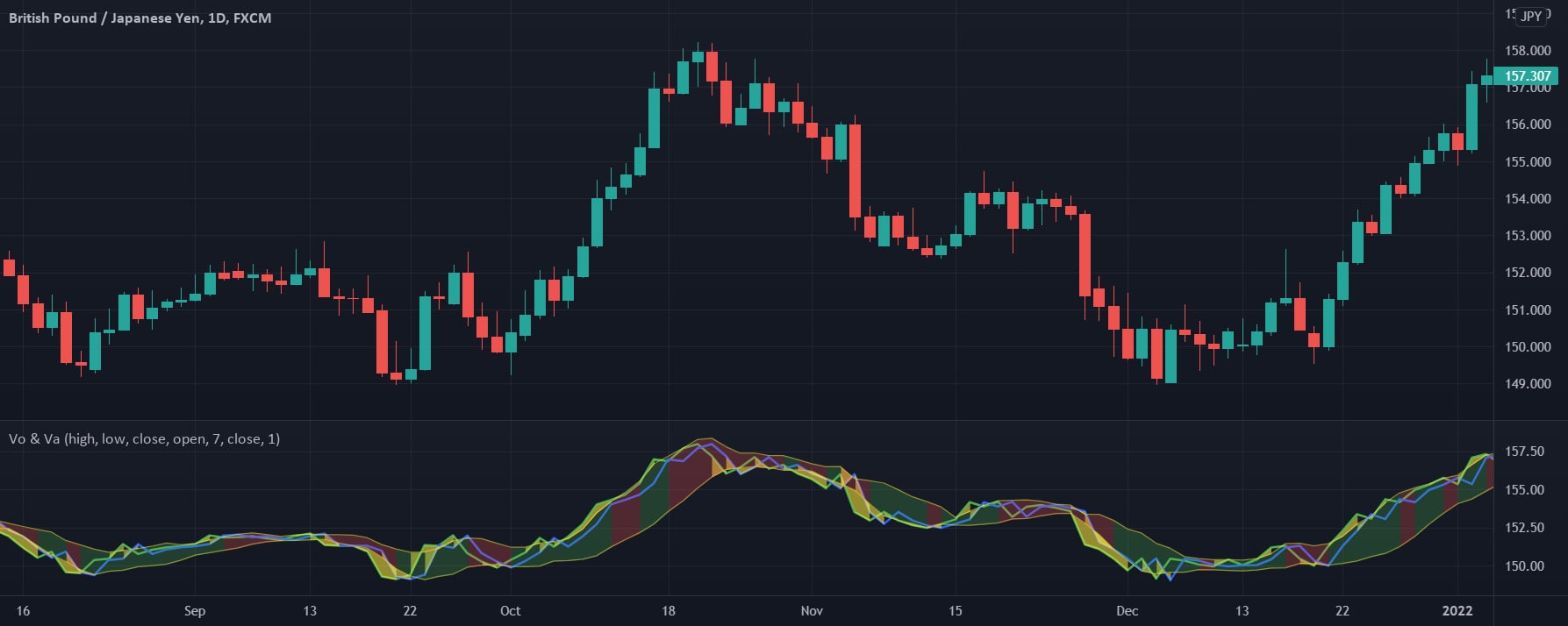
The financial markets are a dynamic environment where asset prices fluctuate based on a myriad of economic, political, and market-specific factors. For traders and investors, understanding and anticipating these movements is crucial for making informed decisions. One essential tool that has been instrumental in analyzing market behavior is the volatility indicator. These tools provide insights into the degree of price variation over time, helping traders gauge market sentiment, spot trading opportunities, and manage risk efficiently. In this article, we’ll explore how volatility indicators work, how they can aid in swing trading, and why mastering them is a game-changer for market participants.
Understanding Volatility Indicators
Volatility, in essence, refers to the speed and magnitude of price changes in the market. A volatile market experiences wild price swings, whereas a less volatile market shows steadier price movements. Volatility indicator are technical analysis tools designed to measure and showcase the intensity of these price fluctuations over a specified period.
Some of the most popular volatility indicators include:
1. Bollinger Bands: This indicator consists of three lines – a simple moving average (middle line) and two standard deviation bands (upper and lower lines). When the bands widen, it indicates high volatility, while narrow bands signify low volatility.
2. Average True Range (ATR): ATR measures the range of price movements in a given period. High ATR values indicate greater volatility, and lower values indicate subdued market activity.
3. Implied Volatility (IV): Commonly associated with options trading, IV reflects the market’s expectations of future volatility levels.
4. Chaikin Volatility: This tool uses the difference between high and low prices over a specific period to measure market volatility, showcasing changes in investor interest or sentiment.
Each of these tools provides valuable insights into the behavior of the market, which traders can leverage to maximize opportunities and minimize risks.
The Role of Volatility Indicators in Swing Trading
Swing trading is a popular trading strategy where traders aim to capitalize on short- to medium-term price moves over a few days to weeks. This approach requires identifying the natural price “swings” caused by underlying market dynamics. Here’s where volatility indicators come into play.
1. Spotting Breakouts and Consolidation Phases
Volatility indicators are especially useful in identifying breakout opportunities. When markets are consolidating or trading within a tight range, volatility tends to decrease. A sudden spike in a volatility indicator like Bollinger Bands can signal a potential breakout in either direction. Swing traders can take positions early, riding the wave of the breakout to capture significant gains.
2. Identifying Reversals and Continuations
Swing trading thrives on entering and exiting trades near pivotal points, such as trend reversals or consolidations. Volatility tools like the ATR can indicate when an asset has moved significantly beyond its average price range, suggesting that a reversal may be imminent. Conversely, when volatility is sustained, it may indicate a continuation of the existing trend, enabling traders to extend their positions.
3. Managing Risks and Setting Stop Loss Levels
Risk management is vital in swing trading, and volatility indicators help in setting realistic stop-loss and profit target levels. For instance, the ATR can be used to calculate stop-loss distances—trading positions taken during high-volatility periods may need wider stops, whereas trades in low-volatility conditions can suffice with tighter stops.
4. Timing Trade Entries and Exits
Using volatility indicators alongside other technical tools, such as support and resistance levels or trend lines, provides better timing for entry and exit points. For example, during phases of low volatility, traders can prepare for a market swing, positioning themselves for an incoming move once volatility spikes.
How to Use Volatility Indicators Effectively?
1. Combine Multiple Indicators
While volatility indicators are powerful, no single tool provides all the answers. Combining them with trend-following indicators (e.g., moving averages) or oscillators (e.g., RSI or MACD) yields more reliable insights. For example, combining Bollinger Bands with an RSI can help confirm overbought or oversold conditions during volatile phases.
2. Adapt to Market Conditions
Markets go through periods of high and low volatility, often cycling between the two. Adapting trading strategies based on these phases is essential. For instance, in a high-volatility market, focus on capturing strong price swings, while in low-volatility markets, consider range-bound strategies like buying low and selling high.
3. Test and Analyze Data
Different assets exhibit different volatility characteristics, and their behavior may vary across timeframes. Thoroughly backtest and analyze how a specific volatility indicator performs in your chosen market and timeframe to ensure it aligns with your strategy.
Advantages of Using Volatility Indicators
1. Informed Decision-Making
Volatility indicators provide data-backed insights into market behavior, reducing guesswork. For swing traders, this means better identification of entry and exit points and an enhanced ability to navigate market turns.
2. Enhanced Risk Management
Understanding market volatility helps traders adjust position sizes, stop-loss levels, and overall exposure effectively. Knowing when markets are entering high-volatility phases can help avoid unnecessary risks.
3. Exploiting Opportunities Across All Market Conditions
Volatility indicators allow traders to profit in various market environments. For instance, a trader can go long during a breakout phase identified through Bollinger Bands or play a rebound during a consolidation detected using ATR.
Limitations to Keep in Mind
While volatility indicators are incredibly useful, they are not foolproof. Traders need to understand that these tools react to historical price data and thus cannot predict the future with absolute certainty. Additionally, relying solely on volatility indicators without incorporating other analysis methods can lead to false signals. Finally, news events or macroeconomic factors often cause sudden price swings that indicators may not immediately account for.
Conclusion
The financial markets are inherently unpredictable, but tools like volatility indicators equip traders with the ability to navigate this uncertainty. For swing trading enthusiasts, these tools are indispensable for understanding market dynamics, managing risk, and timing trades effectively. By recognizing the power of volatility indicators and integrating them into a comprehensive trading strategy, traders can position themselves to maximize returns and minimize adverse outcomes.
Whether you are a novice or an experienced trader, taking the time to understand how these indicators work, along with consistent practice and analysis, will go a long way in improving your trading results. Markets may fluctuate, but with the right tools, you can confidently track, adapt, and thrive in any trading environment.