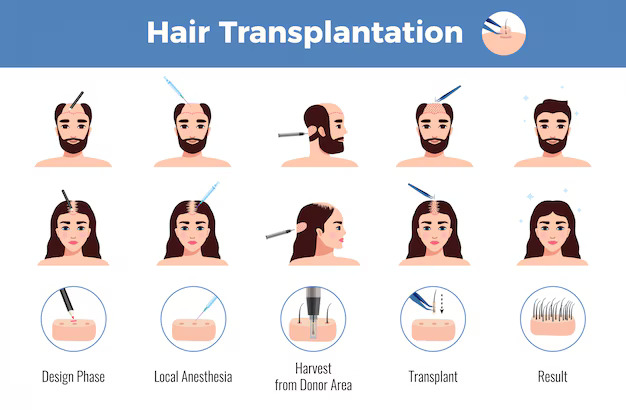
Hair is frequently a big part of who people are, and it has a big impact on how they view themselves and how others see them. For transgender people, getting their hair back may be an important aspect of affirming their gender and making their appearance match their identity. More and more people are getting gender-affirming surgeries, and hair transplant alternatives that are specifically designed for transgender people are becoming more common and specialised. These operations not only help with looks, but they also boost confidence and emotional health.
Understanding Hair Loss in Transgender Individuals
persons of all genders can lose hair, but the reasons and patterns can be very different for transgender persons because of hormones and genetics. Transgender women may lose hair because of testosterone exposure and male-pattern baldness, even if they are doing hormone replacement treatment (HRT). Transgender males, on the other hand, may want to get hairline changes or facial hair transplants as part of their transition. Everyone has their own goals, including getting back hair that has fallen out, changing a hairline to be more feminine or masculine, or adding facial hair like moustaches and beards.
Customized Treatment Plans
A personalised strategy is the first step to a successful hair transplant. Transgender people typically need different treatments and styles for hair restoration than cisgender people do. Surgeons need to think about the patient’s general face anatomy, hormone therapy status, and what they want to happen. For example, transgender women who want to decrease their hairline need a gentle, natural curve and a lot of accuracy. Transgender males, on the other hand, could choose a more defined or angular hairline and facial hair implants. Customisation makes sure that each outcome helps the patient reach their gender expression objectives.
Available Hair Transplant Techniques
Follicular Unit Extraction (FUE) and Follicular Unit Transplantation (FUT) are two of the most used methods for hair transplants. FUE is less intrusive and produces less scarring since it involves taking out individual hair follicles and putting them in the right place. In contrast, FUT entails taking a strip of scalp and cutting it into follicular units for transplanting. Depending on how much hair loss there is, how much donor hair is available, and where the hair is being treated, both methods can work for transgender individuals. Robotic help and high-density packing are two examples of how technology has improved accuracy and outcomes.
Importance of Gender-Affirming Expertise
To get good results, it’s important to work with professionals who know how to help transgender patients with their specific needs. A gender-affirming atmosphere makes sure that patients are comfortable, respected, and fully educated at every step of the procedure. Surgeons that have worked with transgender hair restoration before are more able to match expectations for hairline shape, density, and growth direction. They also know how hormone treatment may change the scalp and hair follicles, and when to do operations for the best outcomes.
Selecting the Right Clinic
Picking the correct facility is a big part of how well a hair transplant will work. When choosing a surgeon, think about their experience, patient evaluations, before-and-after portfolios, and the degree of care they offer. People looking for particular aesthetic results generally look for the best hair transplant surgeon in Lucknow since it has both sophisticated methods and patient-centred care. High standards of hygiene, safety, and aftercare also make the treatment process go more smoothly and with greater confidence.
Finding Support and Community
Getting a hair transplant may be a stressful process, especially for transgender people. Having access to helpful experts and peer groups may make a big impact. These websites give you emotional support and useful tips on everything from getting through recovery to sharing your own experiences. Patients feel seen, heard, and empowered throughout their hair restoration procedure when clinics use inclusive methods.
Hair Transplants for Transgender Men and Women
The technique is still very personal, whether the objective is to bring back a thinning crown, lower a receding hairline, or get a full beard. Transgender women generally want to make their hairline softer and rounder, whereas transgender males may want thicker facial hair and more masculine shapes. The methods and plans are different, but the end effect is the same: more confidence and a step closer to being true to yourself. People frequently say that the best hair transplant surgeon in Gurgaon is the one that offers operations that are personalised to each person’s needs and goals, both medical and aesthetic.
Conclusion
For transgender people, hair transplants are more than just a way to improve their appearance; they are an important component of asserting their identity and becoming more like themselves. Transgender patients can get natural-looking, long-lasting outcomes with the aid of competent doctors and personalised methods. Clinics that offer hair restoration techniques that validate a person’s gender make sure that their customers feel encouraged at every step. As hair transplantation technology improves, so does the chance for everyone to be able to confidently show who they really are.