
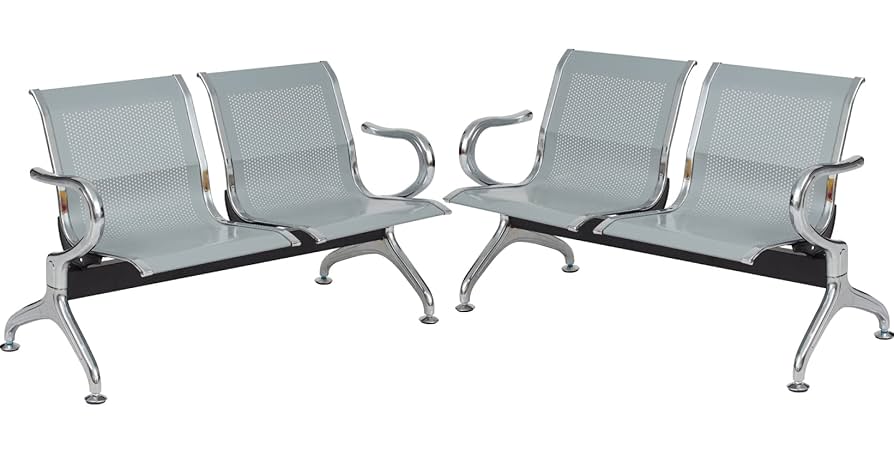
When you invest in waiting chairs for your business, clinic, or institution, you are not just buying furniture. You are making a long-term commitment to the comfort, safety, and satisfaction of your visitors and staff. One of the most important ways to protect that investment is to ensure your supplier has a rigorous quality assurance process in place. High-quality manufacturing goes beyond good design — it requires precise, consistent execution and thorough testing at every stage.
This article outlines the most important factors to consider when evaluating a waiting chair manufacturer and their approach to quality assurance.
Understanding Quality Assurance in Furniture Manufacturing
Quality assurance (QA) is the system of processes, inspections, and controls a manufacturer uses to ensure every product meets agreed-upon standards. In waiting chair production, QA encompasses everything from material sourcing and construction to performance testing and final inspection. A transparent and robust QA program is the mark of a manufacturer that values reliability and customer satisfaction.
Before you finalize a supplier, ask for detailed information about their QA systems. This helps you confirm that the chairs you purchase will hold up over time and comply with all relevant safety and durability standards.
Material Sourcing and Verification
A strong QA process starts with high-quality raw materials. Ask your manufacturer how they select and verify the materials used in their chairs:
- Certified suppliers: Reputable manufacturers only buy materials from vetted sources with documented compliance to industry standards.
- Material traceability: Each batch of materials should be tracked from the supplier to the final product.
- Compliance certifications: Foam, upholstery, metals, and coatings should be certified for safety, such as low emissions (low VOCs) and fire resistance.
This level of oversight ensures that every component performs as expected and reduces the risk of defects.
Production Controls and In-Process Inspections
Quality cannot be “inspected in” at the end of production — it has to be built in from the beginning. Leading manufacturers implement strict production controls to prevent errors and defects during assembly. Evaluate whether your supplier:
- Uses standard operating procedures for each production step.
- Employs trained staff who follow documented work instructions.
- Conducts in-process inspections at critical stages, such as welding, upholstery fitting, and final assembly.
- Utilizes barcoding or RFID tracking to monitor parts and components.
These measures create consistency across production batches and help identify issues before they affect the final product.
Structural and Performance Testing
To ensure durability and safety, waiting chairs must be tested against industry standards. Ask your manufacturer which testing protocols they use. Common benchmarks include:
- ANSI/BIFMA standards: These cover load capacity, stability, and fatigue testing for commercial seating.
- ISO and EN standards: International guidelines that assess strength and performance.
- Internal stress tests: Simulations of years of heavy use to verify durability.
Request documentation or sample test reports to confirm compliance. Consistent performance testing is one of the strongest indicators of a manufacturer’s commitment to quality.
Final Inspection and Packaging
Before chairs leave the factory, they should undergo a comprehensive final inspection. Look for suppliers who:
- Inspect every unit, not just random samples.
- Check for visual defects, such as uneven seams, scratches, or blemishes.
- Test moving parts and connections for proper function.
- Confirm that labeling and instructions are correct and complete.
Careful final inspection ensures you receive products in perfect condition, ready for installation.
Continuous Improvement and Feedback Loops
Quality assurance is not a static process — it should evolve based on customer feedback and product performance. Reputable manufacturers have systems in place to:
- Track warranty claims and service issues.
- Investigate root causes of defects.
- Update production processes based on lessons learned.
Ask potential suppliers how they handle customer feedback and what steps they take to prevent recurring problems.
Certifications and Audits
Independent certifications can validate a manufacturer’s QA practices. Look for evidence of:
- ISO 9001 certification for quality management systems.
- Third-party audits of production and quality control processes.
- Industry awards or recognitions that demonstrate a track record of excellence.
These certifications provide confidence that your supplier meets international standards.
Transparent Communication
Finally, evaluate how transparent and communicative the manufacturer is about their QA process. A reliable partner will:
- Share documentation and test results upon request.
- Provide detailed specifications and performance data.
- Offer clear timelines and expectations.
This transparency helps you make an informed decision and ensures accountability if issues arise.
Conclusion
Choosing the right waiting chair manufacturer involves more than comparing prices and designs. A proven quality assurance system is essential for ensuring that your seating investment delivers durability, comfort, and safety over the long term. By understanding and evaluating your supplier’s QA processes — from materials and production controls to testing and continuous improvement — you can confidently select a partner who will stand behind their products and support your business with integrity.


